Daman Plastic Scrap Godown Fire: Safety Lessons for Scrap & Storage Units
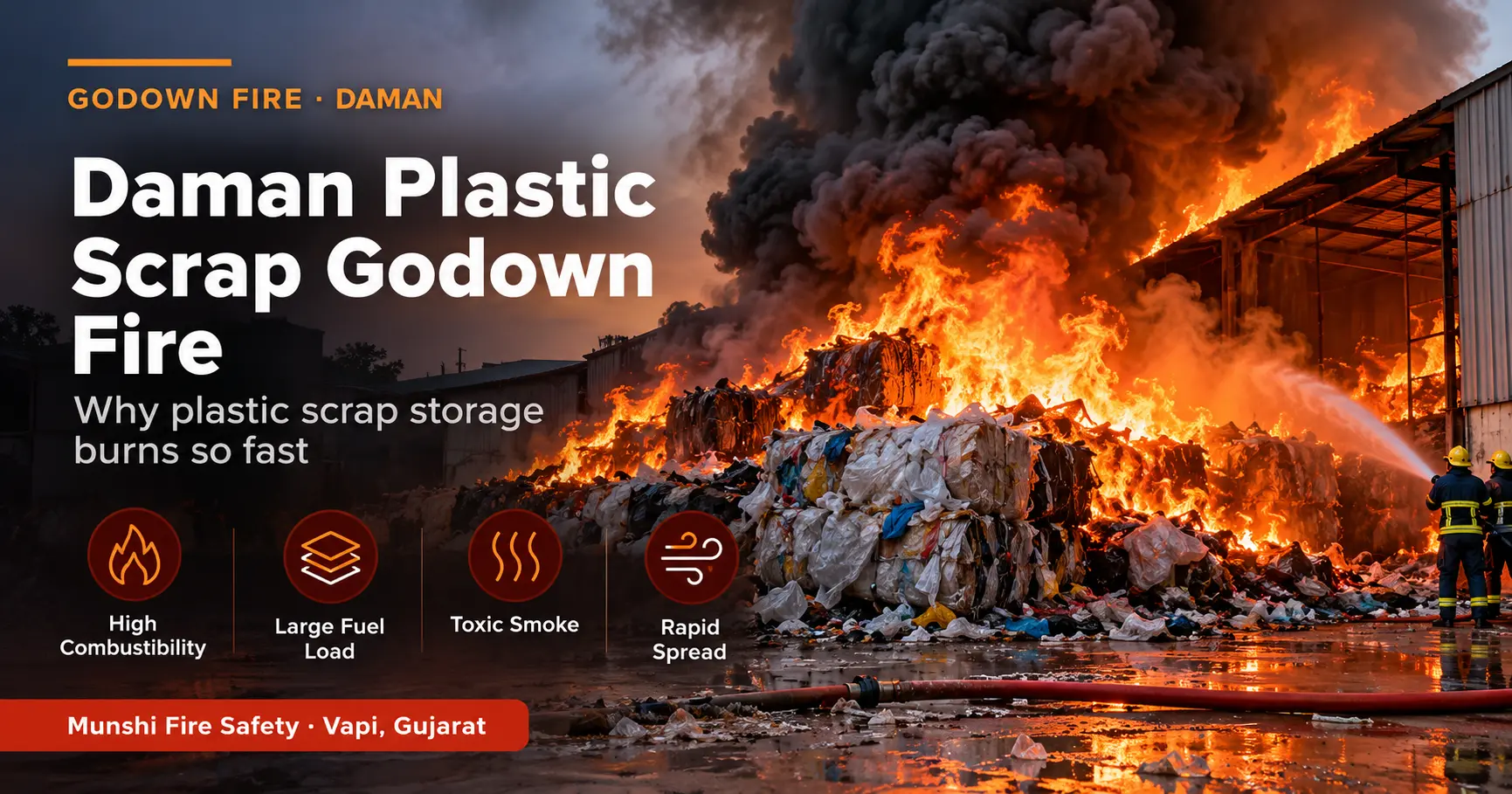
Table of Contents
A major fire broke out in a plastic scrap (bhangar) godown near Ward Chowki, opposite Hotel Deltin in Daman, on the morning of 23 October 2026, according to local reports. Plastic storage fires are among the hardest to control, and similar godowns operate across Daman, Vapi and Silvassa.
What was reported
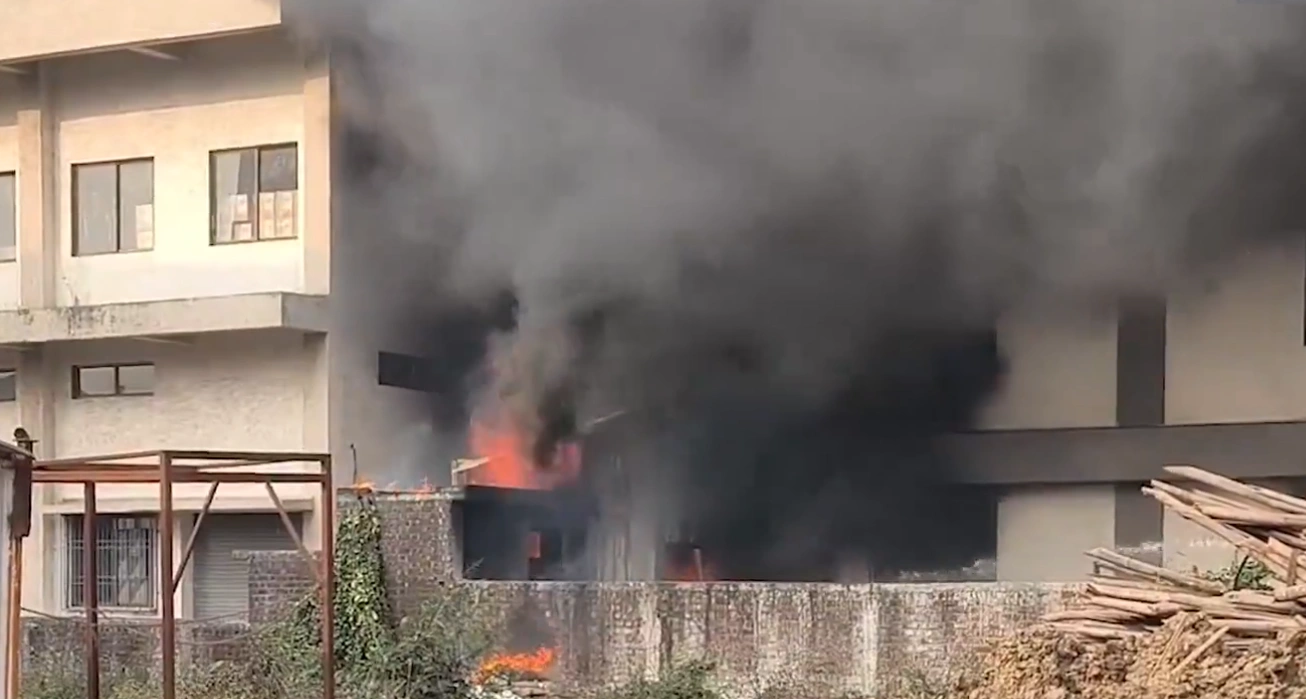
Local reports describe a massive fire that broke out at around 6:00 AM on 23 October 2026 at a plastic scrap godown near Ward Chowki, opposite Hotel Deltin, Daman. Fire tenders from Daman, Vapi and Valsad were reportedly called in, and the fire is said to have taken around three hours to bring under control. At the time of writing we have not seen an official cause, loss figure or confirmed casualty report, so we are not guessing at them. This article uses the incident to explain why this kind of storage is so dangerous and what can be done about it.
Why plastic scrap fires get out of control
- High fuel load: plastic is a petroleum-based material that burns hot and keeps burning. Stacked scrap gives the fire plenty of fuel at every height.
- Fast spread: loose, mixed scrap has air gaps and a large surface area, so flames travel quickly through the pile and can reach the roof.
- Dense, toxic smoke: burning plastics produce thick black smoke and harmful fumes, which makes it hard for people to see, breathe and reach exits, and hard for firefighters to get close.
- Deep-seated fires: fire can smoulder inside a pile and flare up again after the flames appear to be out.
Common ignition sources in scrap godowns
Scrap storage is usually informal, so the usual causes are ordinary ones: electrical short circuits from old or overloaded wiring, sparks from cutting or welding nearby, discarded cigarettes and bidis, heat from lights and machinery, and in hot weather, sun-heated mixed waste. Fires can also start in neighbouring premises and spread in.
Practical fire safety measures for scrap and storage units
- Limit pile size and height: keep stacks small, with clear aisles between them so people can reach the base of a fire.
- Keep ignition sources out: no smoking, no hot work near stock, and no open flames. Run a basic electrical check on wiring and switchboards, and replace damaged or overloaded wiring.
- Right extinguishers, in the right places: ABC dry powder extinguishers and water and foam extinguishers suit plastic and mixed combustibles. Mount them visibly near exits and along aisles.
- Hose reels and a water source: a godown of this size benefits from hydrant or hose-reel cover and a reliable water supply.
- Detection and alarm: a smoke or heat detection and alarm system gives earlier warning, especially for stores that are unattended at night.
- Access for fire tenders: keep the approach road, gate and surrounding space clear so fire tenders can reach the building quickly.
- Train the staff: make sure workers know where the extinguishers are, how to use them and when to leave. Our fire safety training video covers the basics.
What to do if a fire starts
Raise the alarm and get everyone out first. Call the fire brigade on 101 straight away. Only use an extinguisher on a small fire in its early stage and only if you have a clear way out behind you. Do not fight a fire that has reached the stack or roof; plastic smoke is dangerous and the situation can change in seconds.
How Munshi Fire Safety can help
From our Vapi office we supply fire extinguishers, refilling and recharging, inspection and annual maintenance for factories, godowns and warehouses in Vapi, Daman, Silvassa and nearby areas. Contact us for a site visit and a practical extinguisher plan for your storage unit.
The Munshi Fire Safety 6-Step Process
1. What was reported
Local reports describe a massive fire that broke out at around 6:00 AM on 23 October 2026 at a plastic scrap godown near Ward Chowki, opposite Hotel Deltin, Daman. Fire tenders from Daman, Vapi and Valsad were reportedly called in, and the fire is said to have taken around three hours to bring under control. At the time of writing we have not seen an official cause, loss figure or confirmed casualty report, so we are not guessing at them. This article uses the incident to explain why this kind of storage is so dangerous and what can be done about it.
2. Why plastic scrap fires get out of control
- High fuel load: plastic is a petroleum-based material that burns hot and keeps burning. Stacked scrap gives the fire plenty of fuel at every height.
- Fast spread: loose, mixed scrap has air gaps and a large surface area, so flames travel quickly through the pile and can reach the roof.
- Dense, toxic smoke: burning plastics produce thick black smoke and harmful fumes, which makes it hard for people to see, breathe and reach exits, and hard for firefighters to get close.
- Deep-seated fires: fire can smoulder inside a pile and flare up again after the flames appear to be out.
3. Common ignition sources in scrap godowns
Scrap storage is usually informal, so the usual causes are ordinary ones: electrical short circuits from old or overloaded wiring, sparks from cutting or welding nearby, discarded cigarettes and bidis, heat from lights and machinery, and in hot weather, sun-heated mixed waste. Fires can also start in neighbouring premises and spread in.
4. Practical fire safety measures for scrap and storage units
- Limit pile size and height: keep stacks small, with clear aisles between them so people can reach the base of a fire.
- Keep ignition sources out: no smoking, no hot work near stock, and no open flames. Run a basic electrical check on wiring and switchboards, and replace damaged or overloaded wiring.
- Right extinguishers, in the right places: ABC dry powder extinguishers and water and foam extinguishers suit plastic and mixed combustibles. Mount them visibly near exits and along aisles.
- Hose reels and a water source: a godown of this size benefits from hydrant or hose-reel cover and a reliable water supply.
- Detection and alarm: a smoke or heat detection and alarm system gives earlier warning, especially for stores that are unattended at night.
- Access for fire tenders: keep the approach road, gate and surrounding space clear so fire tenders can reach the building quickly.
- Train the staff: make sure workers know where the extinguishers are, how to use them and when to leave. Our fire safety training video covers the basics.
5. What to do if a fire starts
Raise the alarm and get everyone out first. Call the fire brigade on 101 straight away. Only use an extinguisher on a small fire in its early stage and only if you have a clear way out behind you. Do not fight a fire that has reached the stack or roof; plastic smoke is dangerous and the situation can change in seconds.
6. How Munshi Fire Safety can help
From our Vapi office we supply fire extinguishers, refilling and recharging, inspection and annual maintenance for factories, godowns and warehouses in Vapi, Daman, Silvassa and nearby areas. Contact us for a site visit and a practical extinguisher plan for your storage unit.
Commonly Asked Questions
Why do plastic scrap godown fires spread so fast?
Plastic is a high-energy fuel, and loose scrap piles have a lot of air gaps. Flames travel quickly through the pile and produce heavy smoke, which makes it hard to reach and fight the fire.
Which fire extinguishers suit plastic scrap storage?
Plastic is a Class A (solid combustible) material, so ABC dry powder and water or foam extinguishers are the usual choices. Extinguishers only handle small, early fires; larger stores also need hydrant or hose-reel cover.
What number do I call for a fire emergency in India?
Call 101 for the fire brigade. You can also call 112, the national emergency number.
Can Munshi Fire Safety supply extinguishers to godowns in Daman?
Yes. We supply and service fire extinguishers and fire safety equipment from our Vapi office to factories and godowns in Daman and nearby areas. See our Daman fire safety page.