Fire Safety Best Practices for Schools in Vapi
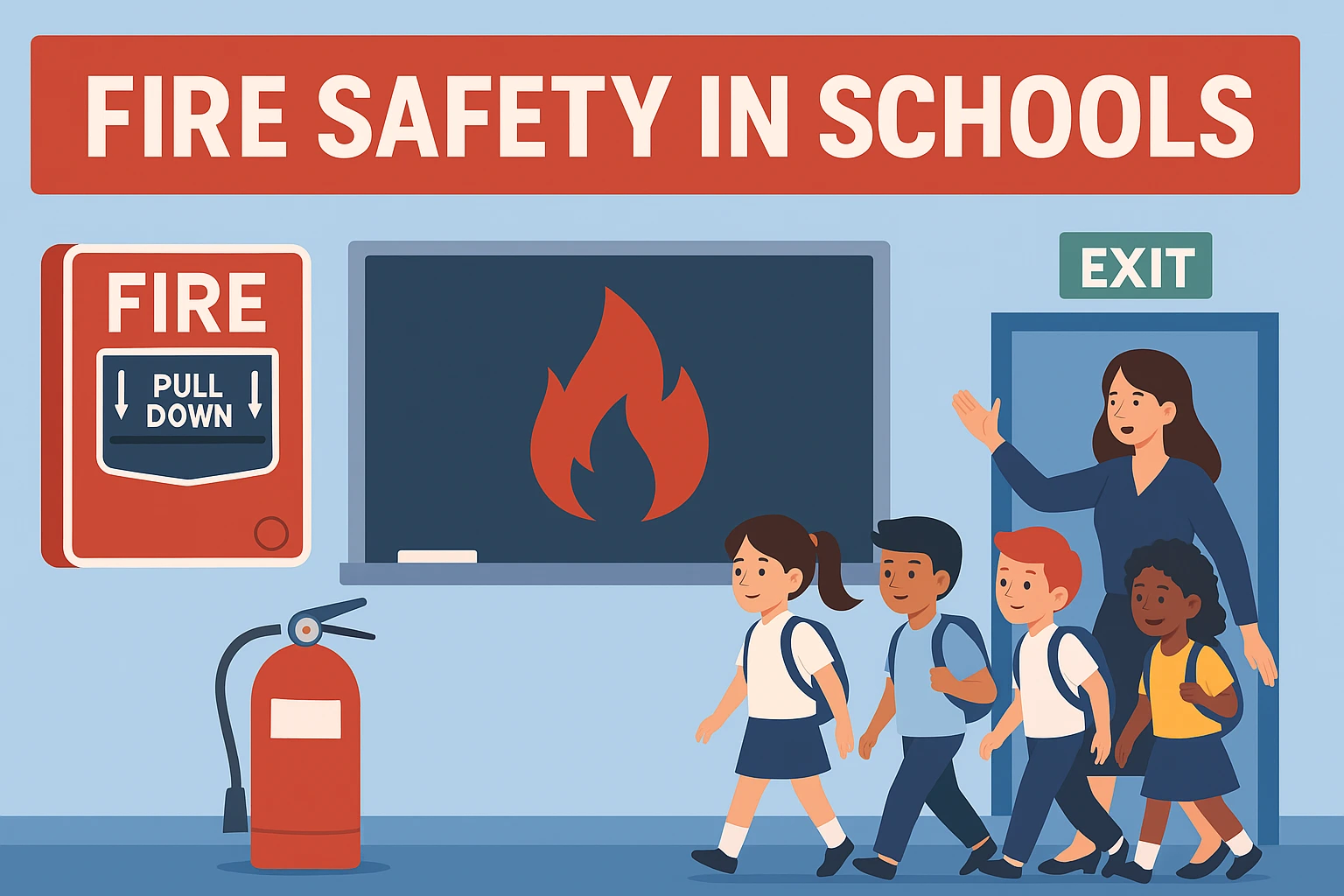
Table of Contents
Essential fire-safety guidelines for Vapi schools: detection, evacuation drills, extinguisher placement, and maintenance to protect students and staff.
Introduction
In Vapi’s bustling educational landscape, schools—from preschools to high schools—must implement comprehensive fire-safety programs. With dozens of young lives in classrooms, science labs, and assembly halls, any lapse in detection, evacuation planning, or equipment maintenance can turn a minor incident into a crisis. This post outlines the critical elements—early warning systems, student-friendly evacuation drills, strategic extinguisher placement, and rigorous maintenance schedules—every Vapi school needs to keep its community safe and comply with Gujarat’s fire-code standards.
1. Early Detection & Alarm Systems
Photoelectric Smoke Detectors: Install in corridors, libraries, and halls to catch smoldering fires.
Heat Sensors: Use rate-of-rise detectors in kitchens and labs to avoid steam-triggered false alarms.
Manual Call Points: Place “Fire – Pull Down” switches near exits for staff or older students.
Voice-Evacuation Panels: Pre-recorded, clear instructions in Gujarati and English.
2. Strategic Extinguisher Placement
ABC Dry-Powder Units: One 4 kg unit per 200 m² in classrooms and offices.
CO₂ Extinguishers: At computer labs and electrical rooms.
Foam Extinguishers: In art studios and cafeteria kitchens.
Visibility & Accessibility: Mount at 1.2 m height, with clear signage and unobstructed access.
3. Student-Friendly Evacuation Drills
Step-by-Step Evacuation Plans: Age-appropriate routes with assembly points marked in open fields.
Drill Frequency: Monthly classroom drills; quarterly full-school exercises.
Role Assignments: Designate teacher-leaders, student marshals, and first-aid helpers.
Debrief & Feedback: Record drill times, identify bottlenecks, and update plans.
4. Inspection, Testing & Maintenance
Daily Visual Checks: Teachers verify extinguisher seals and clear corridors.
Monthly Technical Tests: Alarm sound-checks, detector sensitivity tests.
Quarterly Sprinkler Flow-Tests: Confirm water-flow rates and valve operation.
Annual Full Audit: Conducted by an ISI-certified vendor (e.g., Munshi Fire Safety, Vapi) with a compliance report.
Featured Products
Fire Safety Equipment for Vapi Schools
Explore our IS 15683-certified solutions designed for educational settings:
- 4 kg ABC Extinguisher: Quick deployment in classrooms and offices.
- 2 kg CO₂ Unit: Safe for computer labs and electrical panels
- 6 L Foam Extinguisher: Ideal near kitchen and art areas.
- Wall-Mounted Alarm Call Point: “Fire – Pull Down” stations at every exit.
The Munshi Fire Safety 6-Step Process
1. Introduction
In Vapi’s bustling educational landscape, schools—from preschools to high schools—must implement comprehensive fire-safety programs. With dozens of young lives in classrooms, science labs, and assembly halls, any lapse in detection, evacuation planning, or equipment maintenance can turn a minor incident into a crisis. This post outlines the critical elements—early warning systems, student-friendly evacuation drills, strategic extinguisher placement, and rigorous maintenance schedules—every Vapi school needs to keep its community safe and comply with Gujarat’s fire-code standards.
2. 1. Early Detection & Alarm Systems
Photoelectric Smoke Detectors: Install in corridors, libraries, and halls to catch smoldering fires.
Heat Sensors: Use rate-of-rise detectors in kitchens and labs to avoid steam-triggered false alarms.
Manual Call Points: Place “Fire – Pull Down” switches near exits for staff or older students.
Voice-Evacuation Panels: Pre-recorded, clear instructions in Gujarati and English.
3. 2. Strategic Extinguisher Placement
ABC Dry-Powder Units: One 4 kg unit per 200 m² in classrooms and offices.
CO₂ Extinguishers: At computer labs and electrical rooms.
Foam Extinguishers: In art studios and cafeteria kitchens.
Visibility & Accessibility: Mount at 1.2 m height, with clear signage and unobstructed access.
4. 3. Student-Friendly Evacuation Drills
Step-by-Step Evacuation Plans: Age-appropriate routes with assembly points marked in open fields.
Drill Frequency: Monthly classroom drills; quarterly full-school exercises.
Role Assignments: Designate teacher-leaders, student marshals, and first-aid helpers.
Debrief & Feedback: Record drill times, identify bottlenecks, and update plans.
5. 4. Inspection, Testing & Maintenance
Daily Visual Checks: Teachers verify extinguisher seals and clear corridors.
Monthly Technical Tests: Alarm sound-checks, detector sensitivity tests.
Quarterly Sprinkler Flow-Tests: Confirm water-flow rates and valve operation.
Annual Full Audit: Conducted by an ISI-certified vendor (e.g., Munshi Fire Safety, Vapi) with a compliance report.
6. Featured Products
Fire Safety Equipment for Vapi Schools
Explore our IS 15683-certified solutions designed for educational settings:
- 4 kg ABC Extinguisher: Quick deployment in classrooms and offices.
- 2 kg CO₂ Unit: Safe for computer labs and electrical panels
- 6 L Foam Extinguisher: Ideal near kitchen and art areas.
- Wall-Mounted Alarm Call Point: “Fire – Pull Down” stations at every exit.
Commonly Asked Questions
How often should schools in Vapi conduct fire drills?
Monthly classroom exercises and quarterly full-school drills ensure readiness.
Can students operate fire extinguishers?
Only older students under direct teacher supervision; focus on evacuation first.
Are passive fire-protection measures (doors, coatings) needed?
Yes—EI 60-rated doors and intumescent paints complement active systems.
Who certifies school fire-safety systems?
An ISI-certified company like Munshi Fire Safety, Vapi, issues compliance certificates.
What is the best type of extinguisher for schools?
ABC extinguishers are highly effective and suitable for use in school environments. Additionally, water mist extinguishers, which are pressurized water extinguishers, are an excellent option for areas containing sensitive equipment, such as those found in hospitals.