Fire Safety Essentials for Hospitals in Vapi
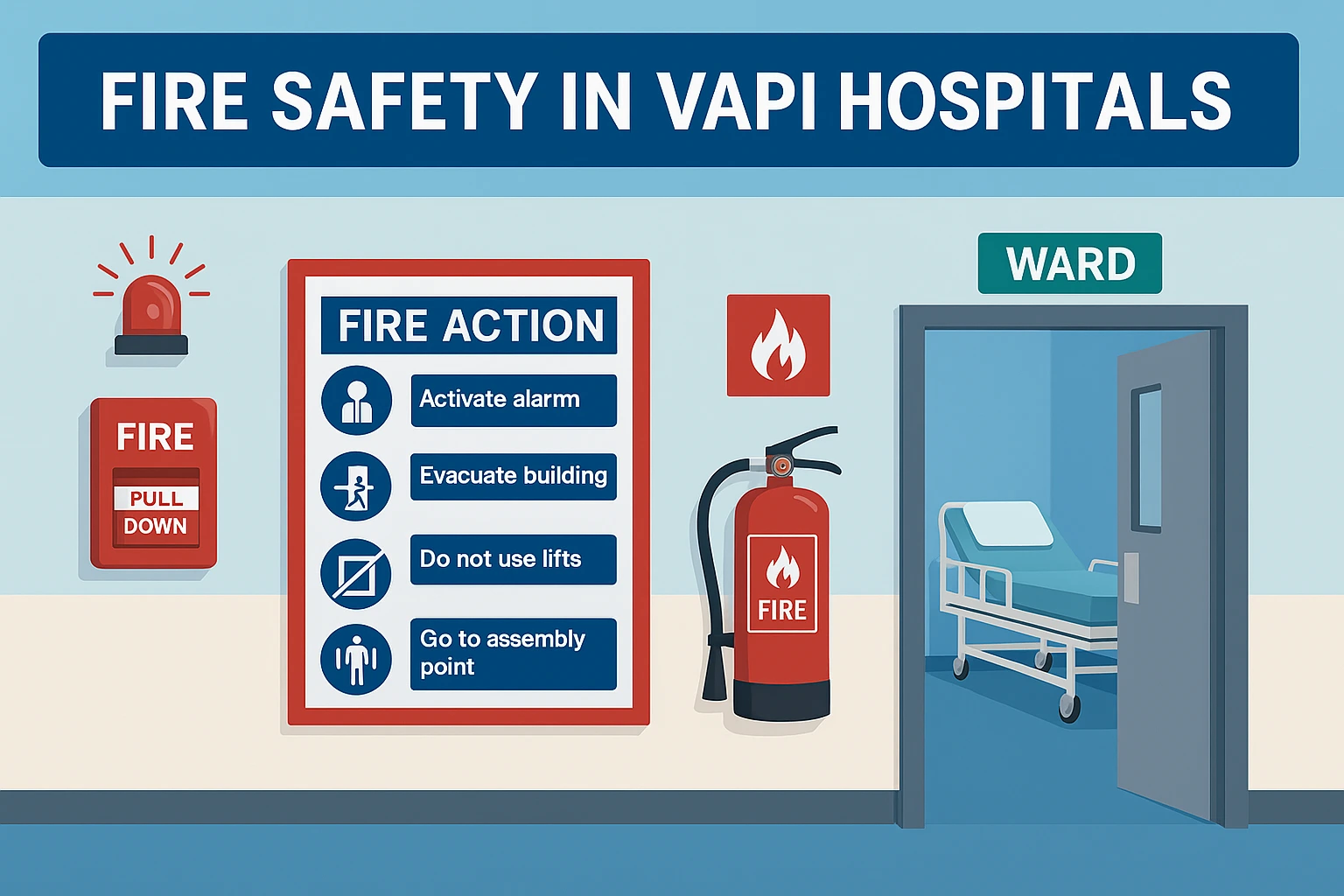
Table of Contents
Ensuring rock-solid fire safety in hospitals isn’t just a regulatory checkbox—it’s a matter of life and death.
Introduction To Fire Safety for Hospitals
In Vapi’s healthcare facilities, where patients depend on uninterrupted care and high-risk equipment surrounds every corridor, a single lapse can cascade into tragedy. From ICU oxygen lines to sterile labs, every department must be wired into an integrated fire-protection strategy. This post outlines the critical measures—detection, suppression, evacuation planning, and staff training—that Vapi hospitals need to safeguard lives, meet Gujarat’s fire-code mandates, and maintain uninterrupted patient care.
1. Advanced Detection & Alarm Systems
Multi-Spectrum Smoke Detectors: UL-listed photoelectric + ionization units in patient rooms and corridors.
Rate-of-Rise Heat Sensors: In kitchens, laundries, and boiler rooms to avoid steam or cooking-mist false alarms.
Voice-Evacuation Panels: Clear, multilingual announcements for rapid, calm evacuation.
2. Reliable Suppression & Extinguishers
Wet-Pipe Sprinklers: Throughout wards and operating theatres with quick-response heads.
Pre-Action & Deluge Systems: In MRI suites and chemical storage for instantaneous protection without water damage.
Portable Extinguishers:
- CO₂ units at electrical panels and server rooms
- Foam units near chemical/pharmacy stores
- ABC dry-powder in general areas
3. Evacuation Planning & Infrastructure
Pressurized Stairwells: Keep smoke out of escape routes.
Refuge Areas: Designated safe zones on every floor, equipped with oxygen supply lines.
Illuminated Exit Signage: Battery-backed in Gujarati and English, with braille panels.
Fire-Rated Doors: EI 90-rated between high-risk zones and patient wings.
4. Staff Training & Drills
Quarterly Fire Drills: Simulate bed-patient evacuation, oxygen-line shutdown, and stairwell egress.
P.A.S.S. Extinguisher Workshops: Hands-on sessions in non-clinical areas.
Role-Specific Training:
- Nurses: CPR + fire-blanket use
- Technicians: Pump-panel operation
- Admin: Alarm-panel troubleshooting
5. Inspection, Testing & Maintenance
Daily Visual Checks: Gauges, seals, and signage on all extinguishers.
Monthly Alarm Tests: Horns, strobes, and panel faults.
Quarterly Sprinkler Flow Tests: Verify water-flow rates.
Annual Full Audit: By an ISI-certified provider (e.g., Munshi Fire Safety, Vapi) with detailed compliance report.
Featured Products
Fire Safety Equipment for Vapi Hospitals
Explore our IS 15683-certified products, optimized for healthcare:
- 2 kg CO₂ Extinguisher: For electrical fires in monitoring stations
- 9 L AFFF Foam Extinguisher: Ideal in pharmacy compounding areas
- Automatic Wet-Pipe Sprinkler Heads: Quick-response, corrosion-resistant
- Pre-Action Valve Assemblies: For sensitive zones like MRI suites
The Munshi Fire Safety 7-Step Process
1. Introduction To Fire Safety for Hospitals
In Vapi’s healthcare facilities, where patients depend on uninterrupted care and high-risk equipment surrounds every corridor, a single lapse can cascade into tragedy. From ICU oxygen lines to sterile labs, every department must be wired into an integrated fire-protection strategy. This post outlines the critical measures—detection, suppression, evacuation planning, and staff training—that Vapi hospitals need to safeguard lives, meet Gujarat’s fire-code mandates, and maintain uninterrupted patient care.
2. 1. Advanced Detection & Alarm Systems
Multi-Spectrum Smoke Detectors: UL-listed photoelectric + ionization units in patient rooms and corridors.
Rate-of-Rise Heat Sensors: In kitchens, laundries, and boiler rooms to avoid steam or cooking-mist false alarms.
Voice-Evacuation Panels: Clear, multilingual announcements for rapid, calm evacuation.
3. 2. Reliable Suppression & Extinguishers
Wet-Pipe Sprinklers: Throughout wards and operating theatres with quick-response heads.
Pre-Action & Deluge Systems: In MRI suites and chemical storage for instantaneous protection without water damage.
Portable Extinguishers:
- CO₂ units at electrical panels and server rooms
- Foam units near chemical/pharmacy stores
- ABC dry-powder in general areas
4. 3. Evacuation Planning & Infrastructure
Pressurized Stairwells: Keep smoke out of escape routes.
Refuge Areas: Designated safe zones on every floor, equipped with oxygen supply lines.
Illuminated Exit Signage: Battery-backed in Gujarati and English, with braille panels.
Fire-Rated Doors: EI 90-rated between high-risk zones and patient wings.
5. 4. Staff Training & Drills
Quarterly Fire Drills: Simulate bed-patient evacuation, oxygen-line shutdown, and stairwell egress.
P.A.S.S. Extinguisher Workshops: Hands-on sessions in non-clinical areas.
Role-Specific Training:
- Nurses: CPR + fire-blanket use
- Technicians: Pump-panel operation
- Admin: Alarm-panel troubleshooting
6. 5. Inspection, Testing & Maintenance
Daily Visual Checks: Gauges, seals, and signage on all extinguishers.
Monthly Alarm Tests: Horns, strobes, and panel faults.
Quarterly Sprinkler Flow Tests: Verify water-flow rates.
Annual Full Audit: By an ISI-certified provider (e.g., Munshi Fire Safety, Vapi) with detailed compliance report.
7. Featured Products
Fire Safety Equipment for Vapi Hospitals
Explore our IS 15683-certified products, optimized for healthcare:
- 2 kg CO₂ Extinguisher: For electrical fires in monitoring stations
- 9 L AFFF Foam Extinguisher: Ideal in pharmacy compounding areas
- Automatic Wet-Pipe Sprinkler Heads: Quick-response, corrosion-resistant
- Pre-Action Valve Assemblies: For sensitive zones like MRI suites
Commonly Asked Questions
Are fire drills mandatory for hospitals under Gujarat law?
Yes—quarterly drills are required to maintain compliance and staff readiness.
How do we test pre-action systems without flooding?
Perform dry-flow and pressure-monitor tests following NFPA 25 guidelines.
Can we conduct drills during visiting hours?
It’s safest to schedule off-peak; for nighttime wards, simulated alarms with staff-only participation are recommended.
Who certifies our fire-safety systems?
An ISI-certified company like Munshi Fire Safety (Vapi) issues official compliance certificates post-audit.