Product Details
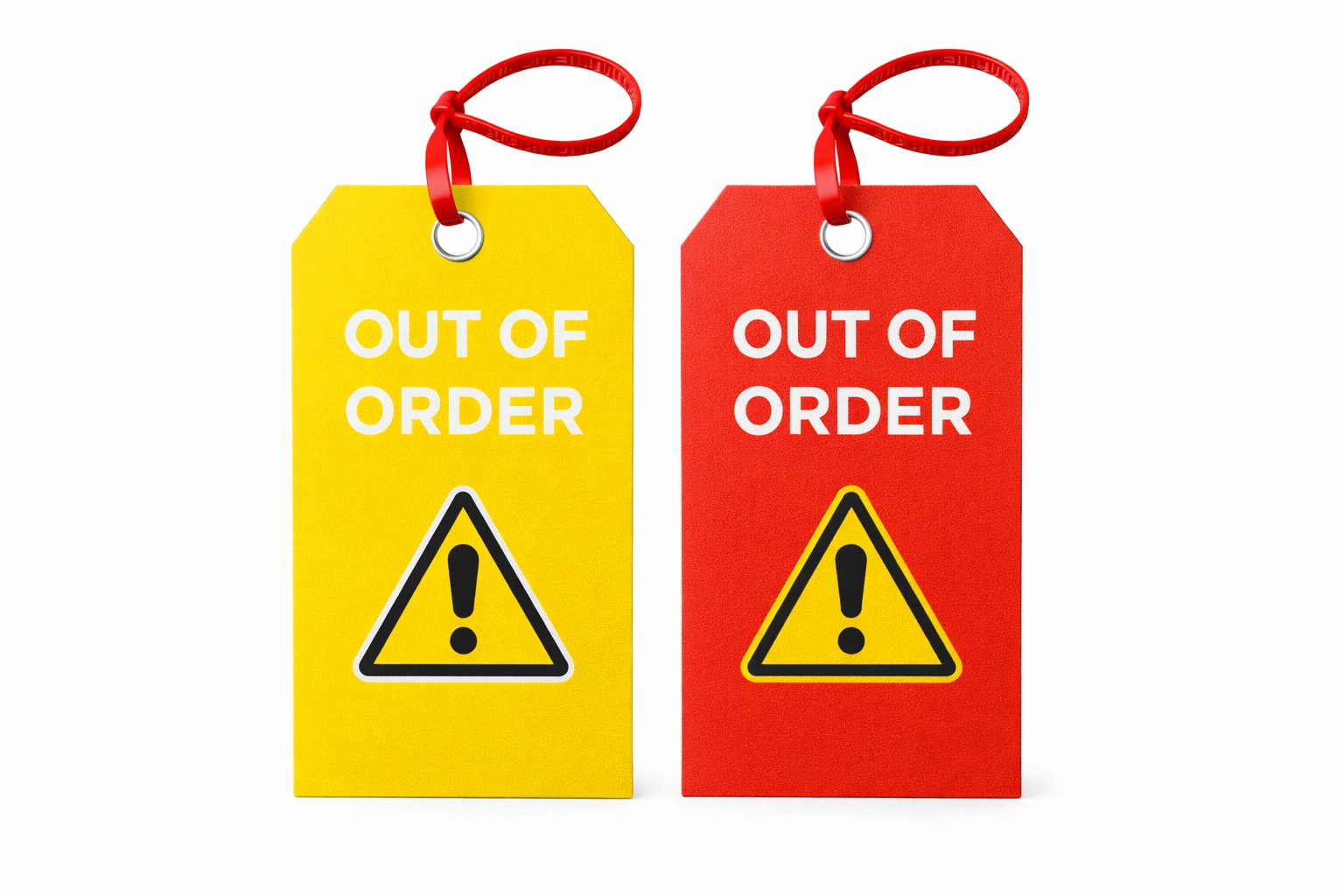
"Out of Service" / "Do Not Use" Safety Tag – High-Visibility PVC
Quality Assured
Premium Products
Expert Support
We're here to help
Description
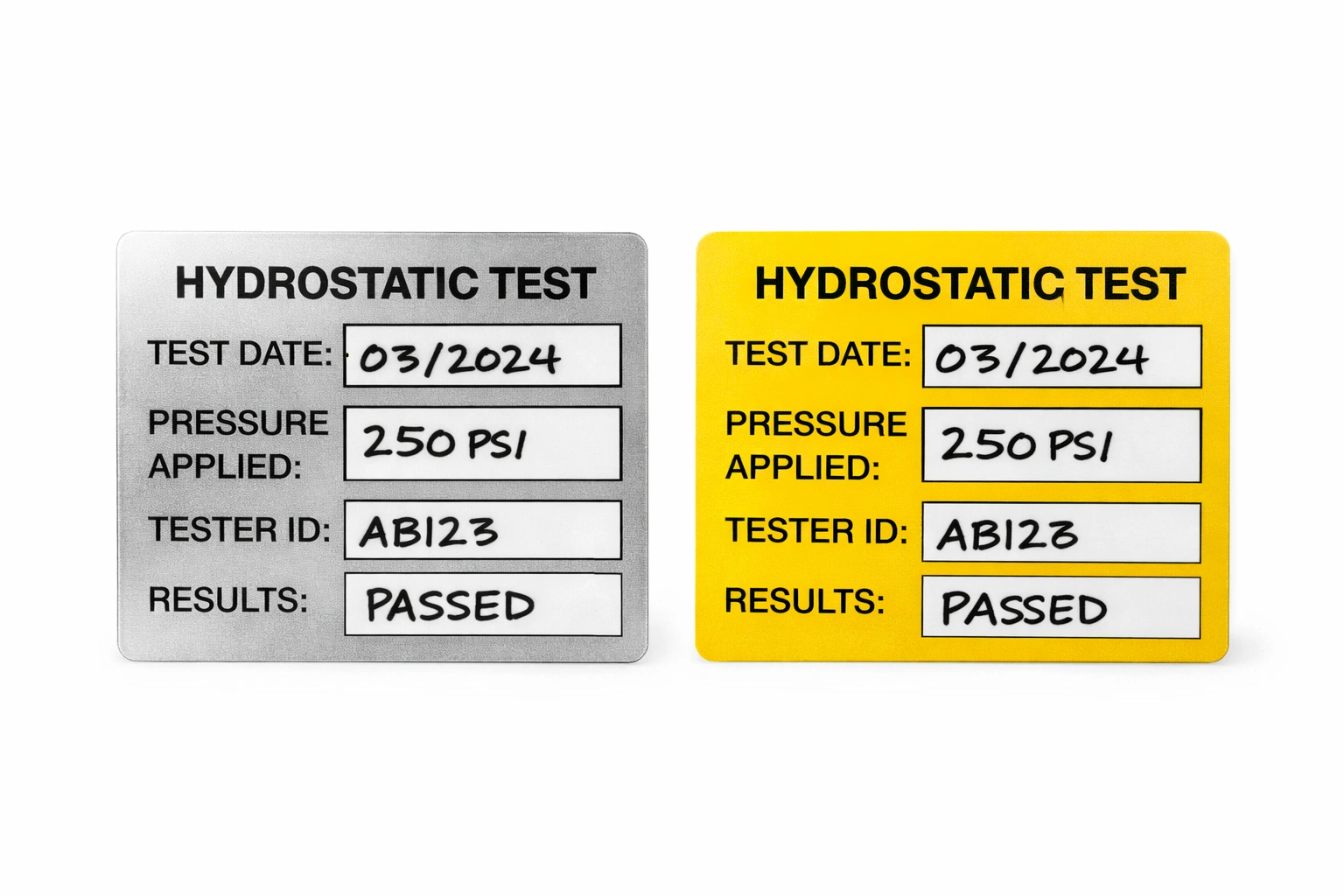
The "Out of Service" tag is a high-visibility warning placed on any fire-safety device that has been removed from operational status—whether for refilling, repair, hydrostatic testing, condemned status, or any other reason that renders it non-functional. Its purpose is blunt and critical: it tells every person who passes by that this extinguisher, hydrant, alarm point, or emergency light cannot be relied upon in an emergency. Without this tag, occupants and emergency responders may assume a missing, empty, or broken device is functional—a false sense of security that can cost lives.
This heavy-gauge PVC tag is printed in bright yellow or red with bold black text: "OUT OF SERVICE — DO NOT USE" (or equivalent wording). The high-contrast colour scheme is deliberately chosen to be visible from a distance and unmistakable in intent. Additional fields allow the technician to write: the reason for removal (refilling, repair, condemned, awaiting parts), the date of removal, the expected return date, and the technician's name and contact number.
Placement protocol: when an extinguisher is removed for service, hang the tag on the empty wall bracket or inside the empty cabinet. When a hydrant is shut down for repair, hang the tag on the landing valve or cabinet door. When an emergency light is non-functional, hang the tag on the fixture. The tag must remain in place until the equipment is returned to full operational status and the responsible person has verified functionality.
The tag also serves a management function: during safety walk-throughs, the site EHS officer can quickly identify all equipment currently out of service, verify that alternative protection has been arranged (e.g., a spare extinguisher placed nearby), and chase overdue returns with the service contractor. A facility with out-of-service tags hanging for weeks without corrective action has a systemic maintenance problem that needs escalation.
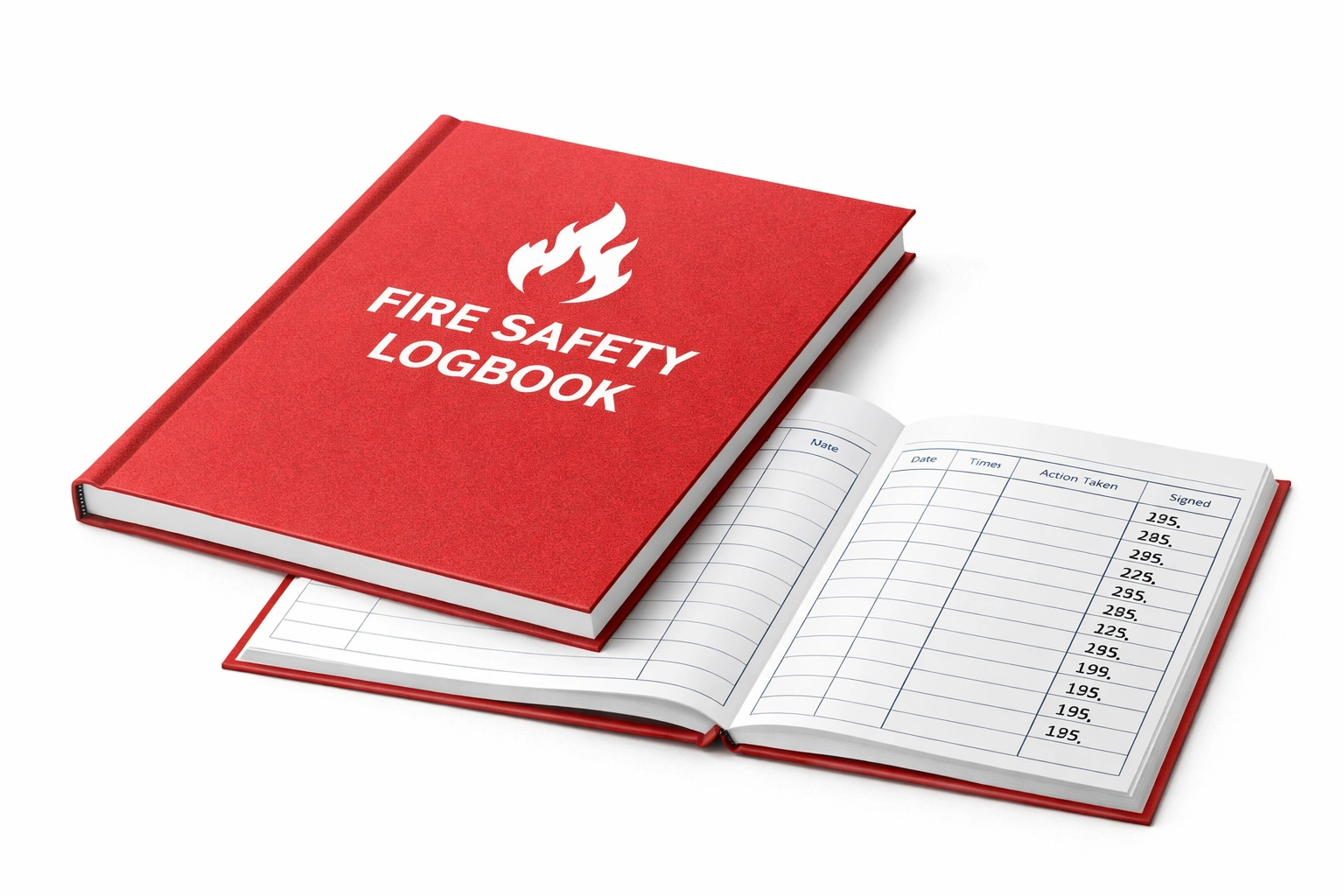
Best practice is to pair every out-of-service tag with a logbook entry recording: the equipment item (type, serial number, location), the reason for removal, the date, the expected return date, and the responsible service provider. When the equipment is returned to service, update the logbook entry with the return date, test results, and the name of the person who verified functionality. Remove and discard the tag only after functional verification is complete.
Tags should be single-use—discard after each use cycle to ensure clean, legible fields on every deployment. Carry a supply of 10–20 tags in the service kit. Store flat in a dry area; PVC tags have effectively unlimited shelf life.
Frequently Asked Questions
Stay Informed: Fire & Safety News and Updates
Subscribe to our newsletter for timely announcements on the latest government fire safety regulations, industry standards, newly released safety equipment, and product availability. Whether it's new product launches or critical rule changes, we'll keep you up to date so you can stay prepared.