Product Details
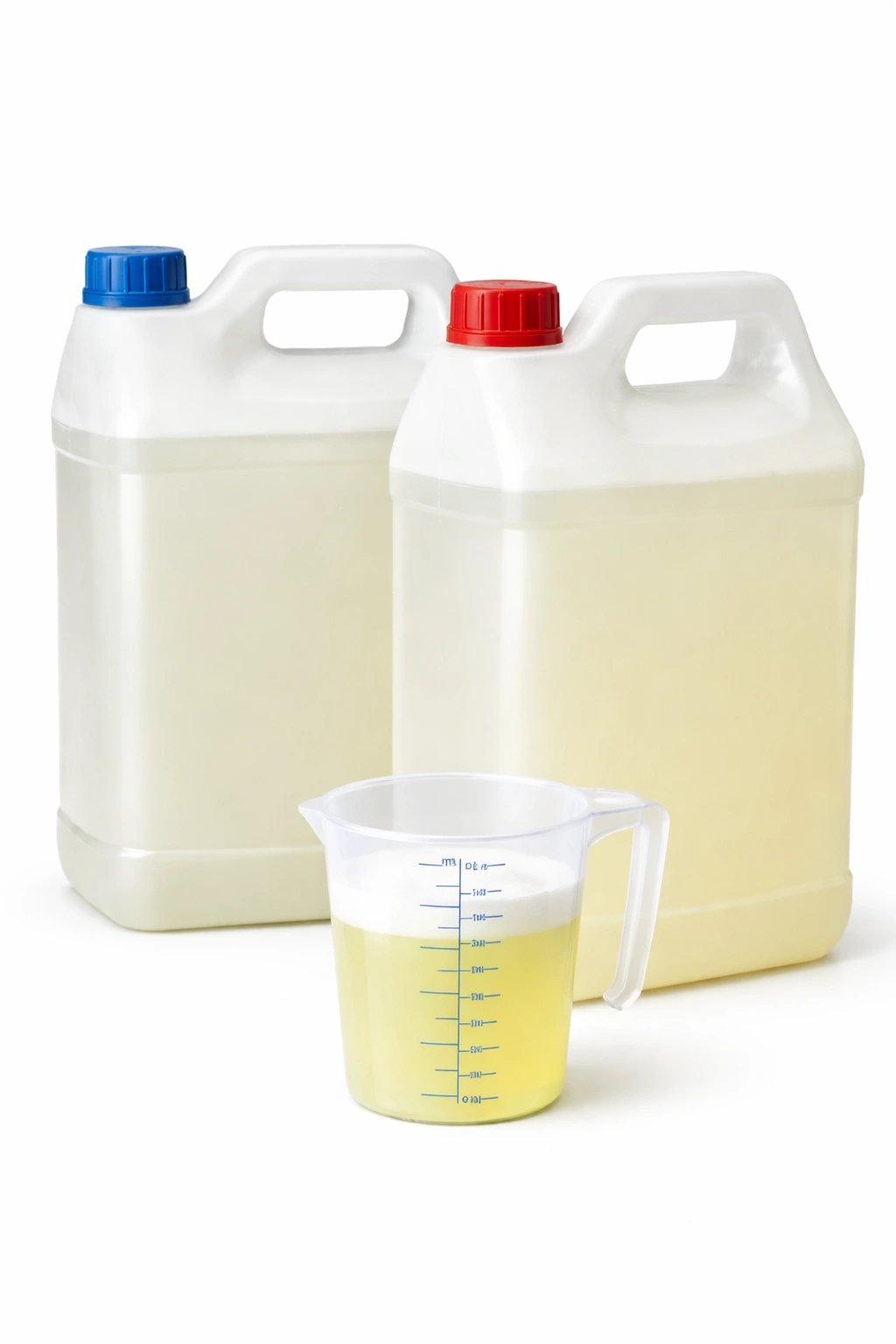
AFFF Foam Concentrate (Aqueous Film-Forming Foam) – 3 % & 6 %
Quality Assured
Premium Products
Expert Support
We're here to help
Description
Aqueous Film-Forming Foam (AFFF) is the world's most widely used firefighting foam concentrate for hydrocarbon fuel fires. Its unique chemistry produces a thin aqueous film that spreads rapidly across the surface of burning fuel, sealing vapour release and cutting off the oxygen supply. Simultaneously, the expanded foam blanket provides an insulating layer that suppresses re-ignition—a critical advantage over dry chemical agents, which have no post-fire securing capability.
AFFF is available in two standard proportioning ratios: 3 % (3 parts concentrate to 97 parts water) and 6 % (6 parts concentrate to 94 parts water). The 3 % variant delivers identical fire performance with half the concentrate consumption, making it the preferred choice for new installations where logistics, storage space, and operating cost matter. The 6 % grade remains common in legacy systems and in regions where the 3 % formulation is not yet stocked by local suppliers.
In Indian fire-safety practice, AFFF finds heavy application across refinery tank farms, fuel depots, aircraft rescue and firefighting (ARFF), transformer yards, and chemical plant areas handling non-polar hydrocarbon solvents. For polar solvents (alcohols, ketones, esters), standard AFFF is unsuitable—an alcohol-resistant AR-AFFF variant must be used instead, as polar solvents destroy the aqueous film on contact.
The concentrate is supplied as a ready-to-use liquid in 20-litre, 200-litre, and 1000-litre IBC containers. It has a shelf life of 15–20 years when stored in original sealed containers, away from direct sunlight, at temperatures between 5 °C and 40 °C. Once a container is opened or the foam is proportioned into a system tank, the shelf life may reduce depending on water quality and contamination risk—annual foam-quality testing (expansion ratio, 25 % drain time, film formation) is recommended per NFPA 11.
Environmental regulations are evolving rapidly around fluorinated foams. Traditional AFFF contains per- and polyfluoroalkyl substances (PFAS), which are persistent environmental pollutants. While AFFF remains legal and widely used in India, buyers should track regulatory developments and consider fluorine-free foam (F3) alternatives for new system installations or training applications where run-off enters open drains.
During extinguisher refilling, AFFF is pre-mixed with water at the correct ratio and charged into mechanical-foam or stored-pressure foam extinguishers. Accurate proportioning is essential—an under-concentrated solution will not form a stable film, while over-concentration wastes expensive concentrate without improving performance. Use calibrated measuring equipment and record the batch number of every concentrate container used.
Frequently Asked Questions
Stay Informed: Fire & Safety News and Updates
Subscribe to our newsletter for timely announcements on the latest government fire safety regulations, industry standards, newly released safety equipment, and product availability. Whether it's new product launches or critical rule changes, we'll keep you up to date so you can stay prepared.