Product Details
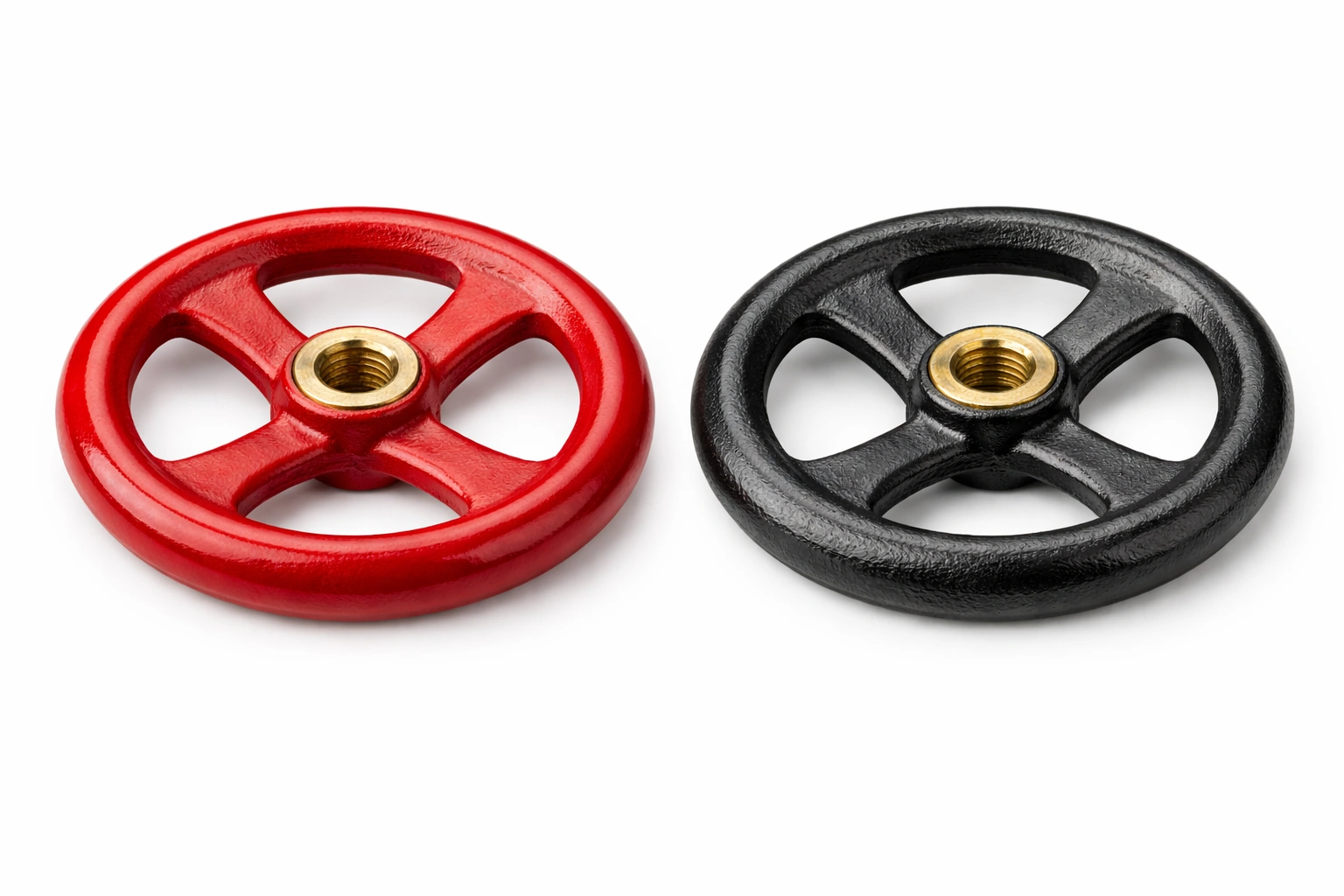
Hydrant Valve Handwheel – Cast Iron / Ductile Iron (Multi-Size)
Quality Assured
Premium Products
Expert Support
We're here to help
Description
The handwheel is the operator interface for every gate valve, sluice valve, and landing valve in the fire hydrant network. It converts the operator's rotational force into linear stem travel that opens or closes the valve. A missing, cracked, or seized handwheel means the valve cannot be operated manually—and in a fire emergency, "cannot be operated" means "fire water does not flow."
Handwheels are manufactured from cast iron (IS 210 Grade FG 200) for standard applications or ductile iron (IS 1865 Grade 400/12) for high-impact environments. Ductile iron is significantly more resistant to cracking under impact or over-torque than grey cast iron, making it the preferred material for fire service valves that may be operated under stress by emergency personnel wearing heavy gloves. Some specialised installations use synthetic (glass-filled nylon) handwheels where electrical insulation or chemical resistance is required.
The critical interface dimension is the spindle bore—the square or hexagonal hole in the hub that mates with the valve stem. Common spindle profiles in Indian hydrant valves are 15 mm, 20 mm, and 25 mm square. A mismatched bore rounds out under torque, creating a "slipping wheel" that spins without moving the stem. Always verify the spindle profile and dimensions against the installed valve before ordering replacement wheels.
Handwheel diameter determines the mechanical advantage available to the operator. Larger wheels (250–300 mm) reduce the effort needed to open stiff or partially seized valves, but require more clearance around the valve. Standard diameters for fire hydrant gate valves are 150 mm (2″ valve), 200 mm (3″–4″ valve), and 250–300 mm (6″+ valve). The wheel must be large enough that an operator in firefighting gloves can grip and turn it without slipping.
Maintenance is simple but essential: keep the wheel painted (red or as per site colour code) to prevent corrosion, grease the spindle interface annually to prevent seizure, and replace any wheel that shows cracks, chips, or loose fit on the stem. During hydrant inspections, operate each valve through its full range (open → close → open) to confirm the wheel is functional and the valve is not seized. Record the operating torque (subjective assessment: light / moderate / heavy / seized) on the inspection tag.
Spare handwheels should be stocked for the most common valve sizes on site. A seized valve discovered during an emergency, where the replacement wheel is "on order," is an unacceptable operational gap. Keep at least two spares of each size in the hydrant maintenance store.
Frequently Asked Questions
Stay Informed: Fire & Safety News and Updates
Subscribe to our newsletter for timely announcements on the latest government fire safety regulations, industry standards, newly released safety equipment, and product availability. Whether it's new product launches or critical rule changes, we'll keep you up to date so you can stay prepared.