Product Details
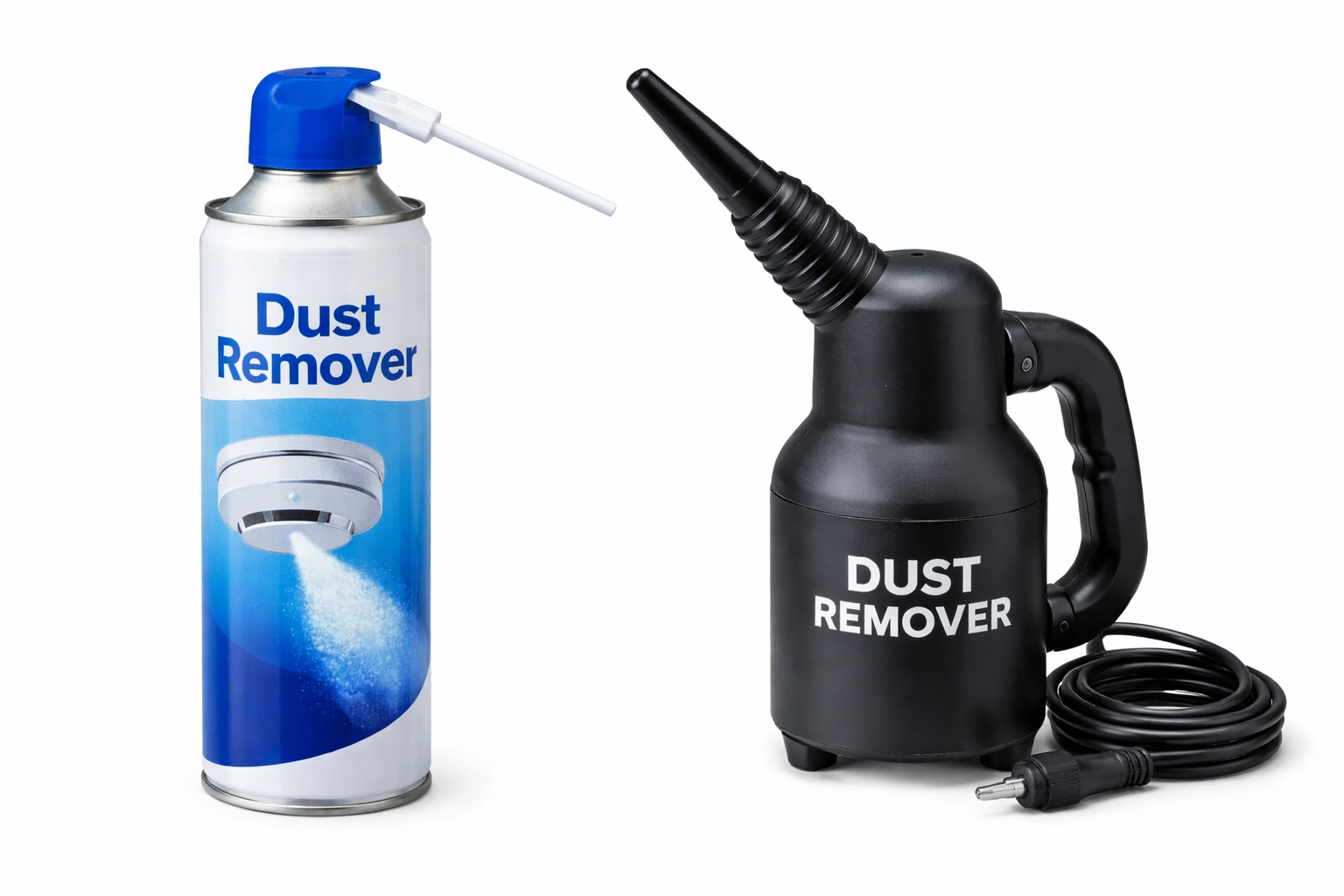
Detector Dust Remover – Oil-Free Canned Air / Compressed Gas Duster
Quality Assured
Premium Products
Expert Support
We're here to help
Description
Dust contamination inside smoke and heat detector chambers is the single largest cause of false fire alarms in Indian industrial and commercial buildings. Textile fibres, construction dust, insect debris, and atmospheric particulates accumulate on the optical sensing surfaces over time, scattering light in ways that mimic smoke particles and triggering nuisance alarms. Each false alarm erodes occupant trust in the system, desensitises response behaviour, and—in the worst case—leads to genuine alarms being ignored. Detector cleaning is therefore not a cosmetic exercise; it is a direct false-alarm reduction measure.
This oil-free canned air duster delivers a high-pressure burst of clean, dry, inert gas (typically difluoroethane or tetrafluoroethane, or CO₂ in newer eco-formulations) to dislodge dust from detector chambers, circuit boards, and sensing elements without physical contact, liquid residue, or static discharge. The "oil-free" specification is critical: standard workshop compressed-air lines carry compressor oil mist that deposits on optical surfaces, degrading sensitivity and voiding detector warranties.
Usage technique matters. Hold the can upright (tilting causes liquid propellant to discharge, which can freeze-damage sensitive electronics), insert the nozzle extension tube into the detector chamber slots, and deliver 2–3 short bursts. Avoid continuous sustained spraying—prolonged discharge cools the can rapidly, reducing pressure and potentially causing condensation inside the detector. Wear safety glasses during cleaning; ejected dust can irritate eyes.
For routine maintenance, canned air is adequate for quarterly cleaning of individual detectors. For large-scale cleaning (100+ detectors per session), an electric compressed-air blower with an inline moisture filter and oil separator is more cost-effective and environmentally preferable. Ensure the blower delivers oil-free, dry air—standard workshop compressors without filtration are unsuitable.
After cleaning, perform a functional test (smoke test aerosol) to confirm the detector responds correctly. Log the cleaning and test result in the fire alarm logbook. Detectors that continue to false-alarm after cleaning may have damaged sensing elements and should be replaced.
Storage: keep canned dusters upright in a cool area below 50 °C. Do not puncture or incinerate. Each can provides approximately 200–400 short bursts depending on capacity. Carry at least 2 cans per service visit for medium-sized buildings.
Frequently Asked Questions

Stay Informed: Fire & Safety News and Updates
Subscribe to our newsletter for timely announcements on the latest government fire safety regulations, industry standards, newly released safety equipment, and product availability. Whether it's new product launches or critical rule changes, we'll keep you up to date so you can stay prepared.