Product Details
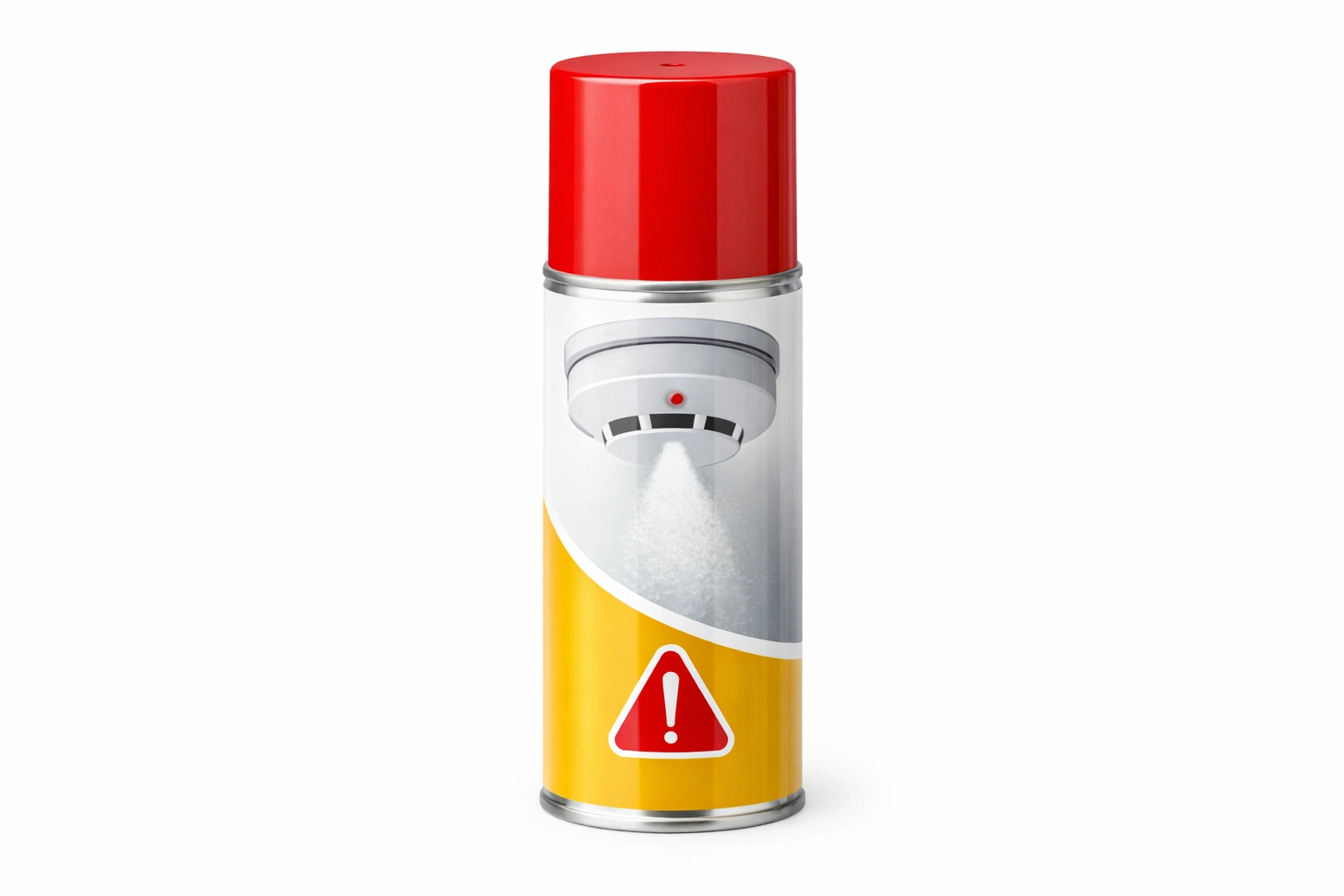
Smoke Detector Test Aerosol – Non-Flammable (Optical Detector Compatible)
Quality Assured
Premium Products
Expert Support
We're here to help
Description
Smoke detector test aerosol is the standard field tool for verifying the functional response of optical (photoelectric) smoke detectors without generating real smoke or flame. It produces a controlled burst of fine particles that scatter light inside the detector's sensing chamber, triggering the alarm in exactly the same way that real smoke particles would. This allows technicians to confirm that the detector, its wiring, and the fire alarm panel are all functioning correctly—a critical annual and monthly compliance requirement under IS 2189 and most fire-safety audit protocols.
The aerosol is dispensed from a pressurised can through a narrow nozzle, typically directed into the detector's sensing chamber from a distance of 20–30 cm. For ceiling-mounted detectors (the vast majority), a telescopic test pole with a detector cup (sold separately) is used to deliver the spray at height without a ladder. The cup captures the aerosol around the detector and prevents overspray that would contaminate adjacent detectors or trigger multiple alarms simultaneously.
Modern test aerosols are formulated to be non-flammable, non-conductive, and residue-free. These properties are non-negotiable: a flammable spray in a confined ceiling void is an ignition hazard; a conductive spray can short-circuit detector electronics; a residue-leaving spray coats the sensing chamber and causes persistent false alarms for days after testing. Always use a spray specifically formulated for smoke detector testing—never substitute with commercially available aerosol products (hairspray, insecticide, etc.).
The test protocol is straightforward: spray a 1–2 second burst into the detector cup, wait up to 30 seconds for the detector to alarm, confirm the alarm appears on the fire panel with the correct zone/address, then reset the panel and allow the detector to clear. Record the result (pass/fail) on the detector test sheet and in the fire alarm logbook.
Failure to alarm within 30 seconds indicates a detector fault—dirty chamber, failed LED/sensor, or wiring issue. Do not simply spray more aerosol; excessive application saturates the chamber and may cause the detector to latch in alarm, requiring physical removal and cleaning to reset.
Each can provides approximately 100–200 short bursts (model dependent), sufficient for a medium-sized building in a single session. Carry at least two cans per service visit to avoid running out mid-test. Store cans upright in a cool area below 50 °C; do not puncture, incinerate, or expose to direct sunlight.
Frequently Asked Questions
Stay Informed: Fire & Safety News and Updates
Subscribe to our newsletter for timely announcements on the latest government fire safety regulations, industry standards, newly released safety equipment, and product availability. Whether it's new product launches or critical rule changes, we'll keep you up to date so you can stay prepared.