Product Details
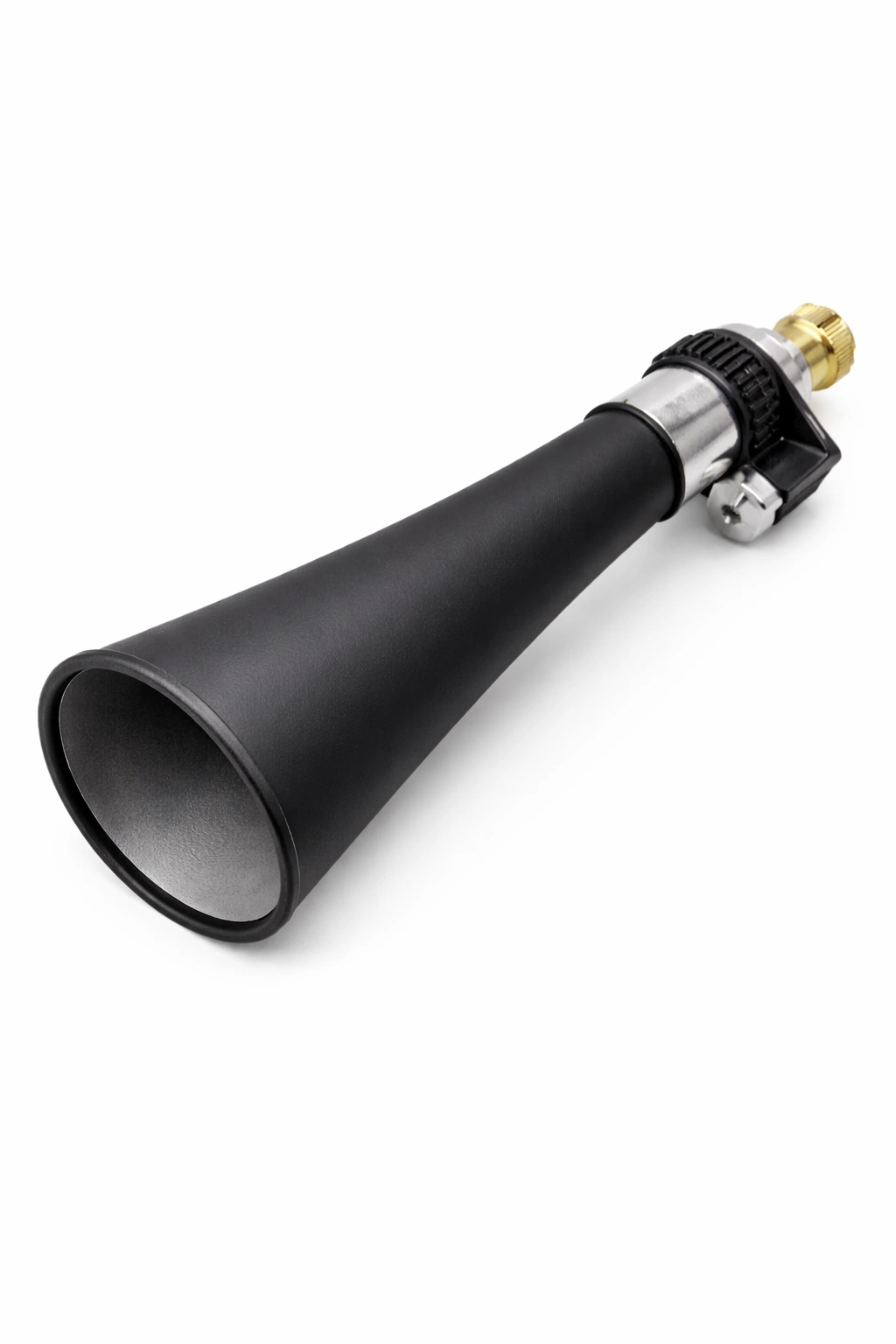
CO₂ Extinguisher Discharge Horn – Frost-Free (Anti-Static)
Quality Assured
Premium Products
Expert Support
We're here to help
Description
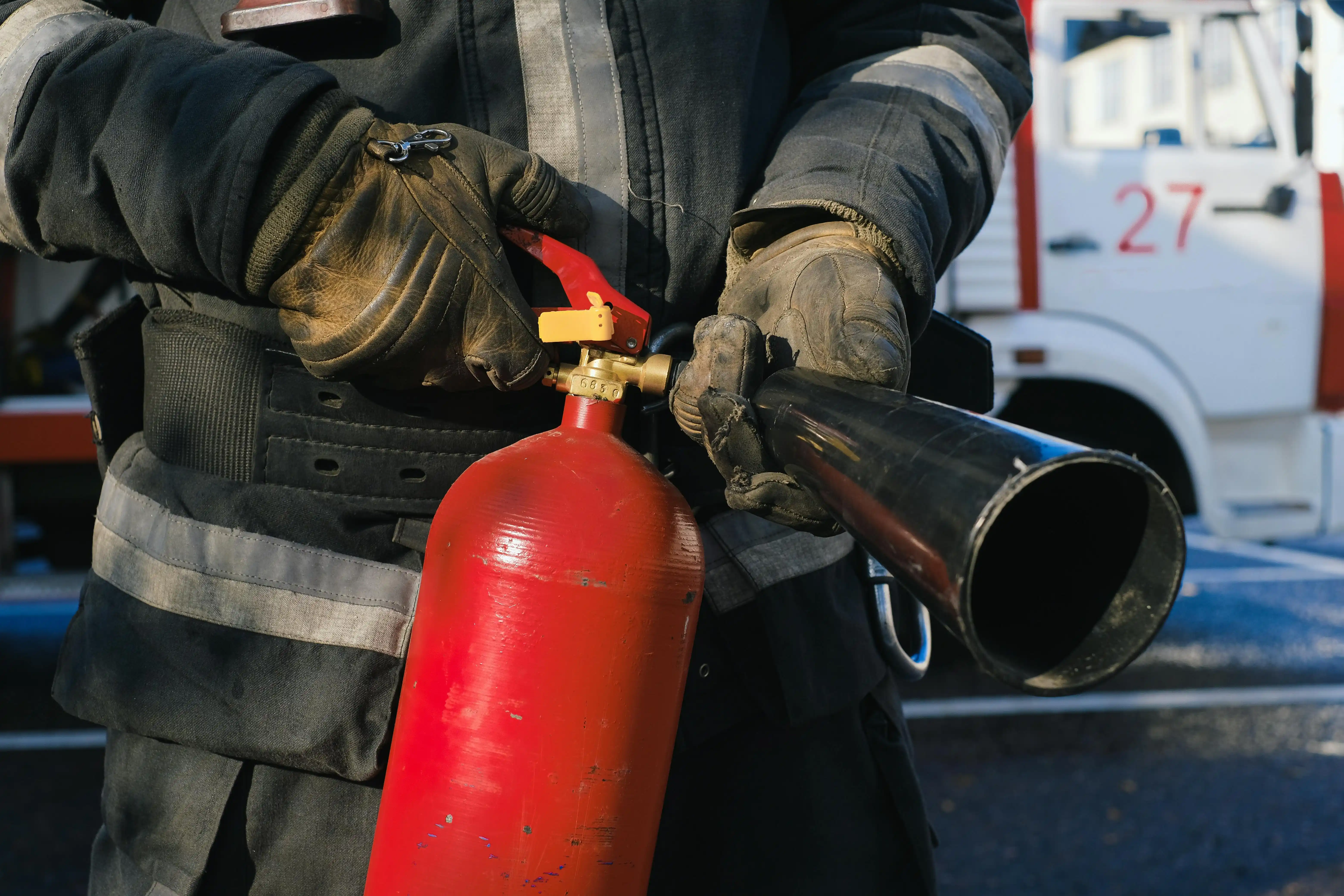
The discharge horn is the signature component of a CO₂ fire extinguisher and one of the most misunderstood. When liquid CO₂ stored at approximately 55–60 bar expands through the valve and into the horn, it undergoes a dramatic phase change: the sudden pressure drop causes adiabatic cooling, converting the liquid into a mixture of gaseous CO₂ and solid "dry ice" snow at approximately –78 °C. The horn's job is to direct this extremely cold discharge stream onto the fire while protecting the operator's hands from cryogenic contact.
Traditional horns were made from bare metal—effective at directing the gas but dangerously conductive of cold. Operators gripping a metal horn during a sustained discharge suffered frostbite injuries within seconds. Modern frost-free horns solve this with a non-conductive, non-metallic construction—typically glass-reinforced nylon, polycarbonate, or specially formulated ABS—that insulates the operator's hand from the cryogenic stream. Many designs include a moulded grip ring or handle positioned behind the horn bell, ensuring the operator's fingers never contact the discharge path.
The anti-static property is equally important. The high-velocity CO₂ gas flow generates significant static charge through triboelectric friction inside the horn. In environments with flammable vapours (the very situations where CO₂ extinguishers are commonly used), a static discharge from a non-anti-static horn could ignite the atmosphere. Anti-static horns incorporate conductive carbon particles or metallic grounding paths within the polymer matrix, dissipating charge safely to the extinguisher body and thence to ground.
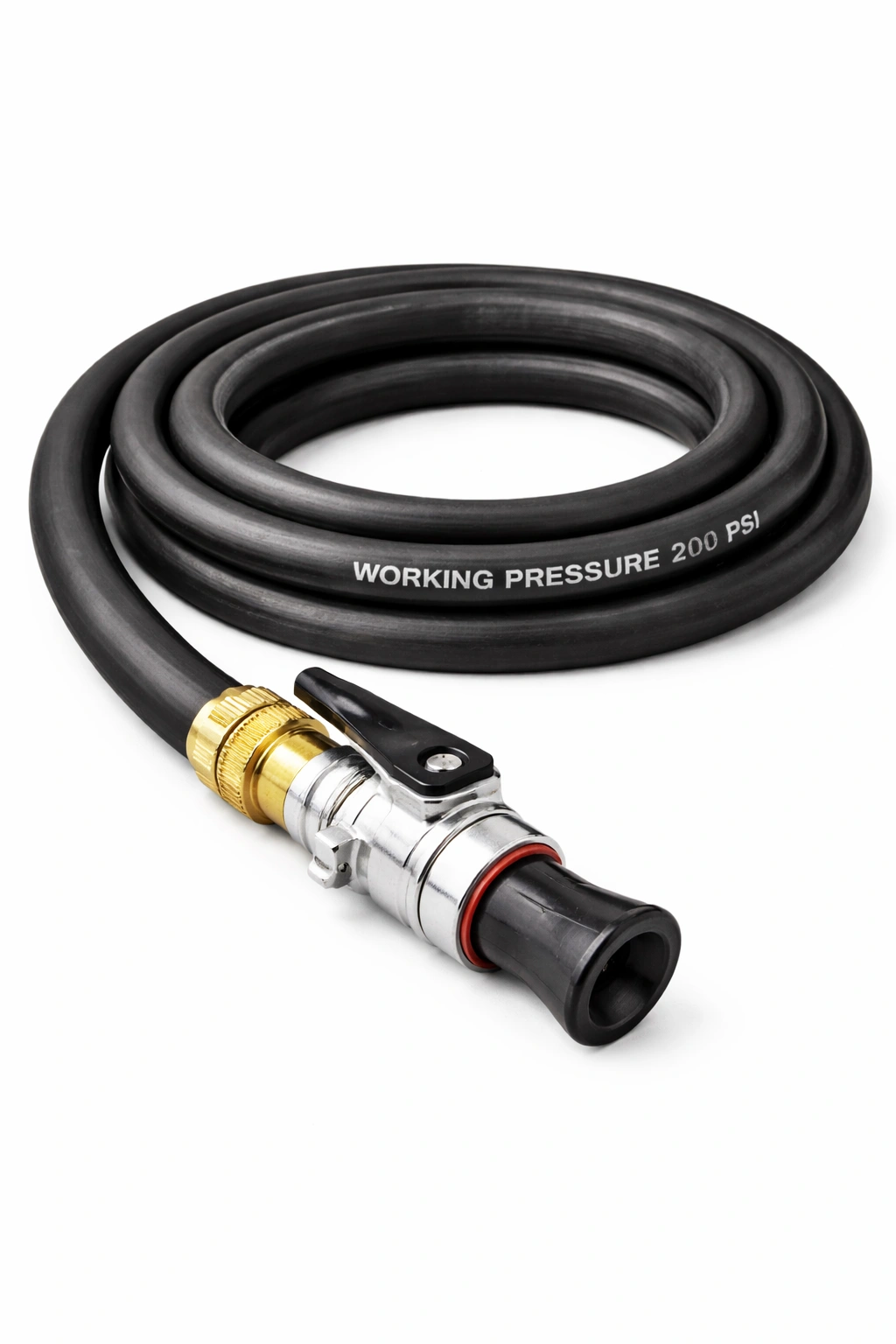
Horn connections vary by manufacturer: the most common type press-fits onto a flexible high-pressure hose that swivels at the valve outlet. Some smaller CO₂ extinguishers (2 kg) mount the horn directly on the valve via a rigid elbow. Always match the horn connection type and diameter to the extinguisher model—forced fitting risks cracking the horn or damaging the hose coupling.
During servicing, the horn should be inspected for cracks, chips, UV degradation (yellowing/brittleness), and secure hose attachment. A cracked horn is a serious safety hazard—it can shatter during discharge, directing the cryogenic stream unpredictably and leaving the operator exposed. Replace any horn that shows visible damage, discolouration, or looseness at the connection.
Spare horns should be stored away from UV light and heat sources. They are lightweight and inexpensive; maintaining a stock of the three or four most common models (2 kg, 4.5 kg, 6.5 kg, and 9 kg CO₂ extinguisher horns) ensures fast turnaround during servicing.
Frequently Asked Questions
Related Products
Stay Informed: Fire & Safety News and Updates
Subscribe to our newsletter for timely announcements on the latest government fire safety regulations, industry standards, newly released safety equipment, and product availability. Whether it's new product launches or critical rule changes, we'll keep you up to date so you can stay prepared.