Product Details
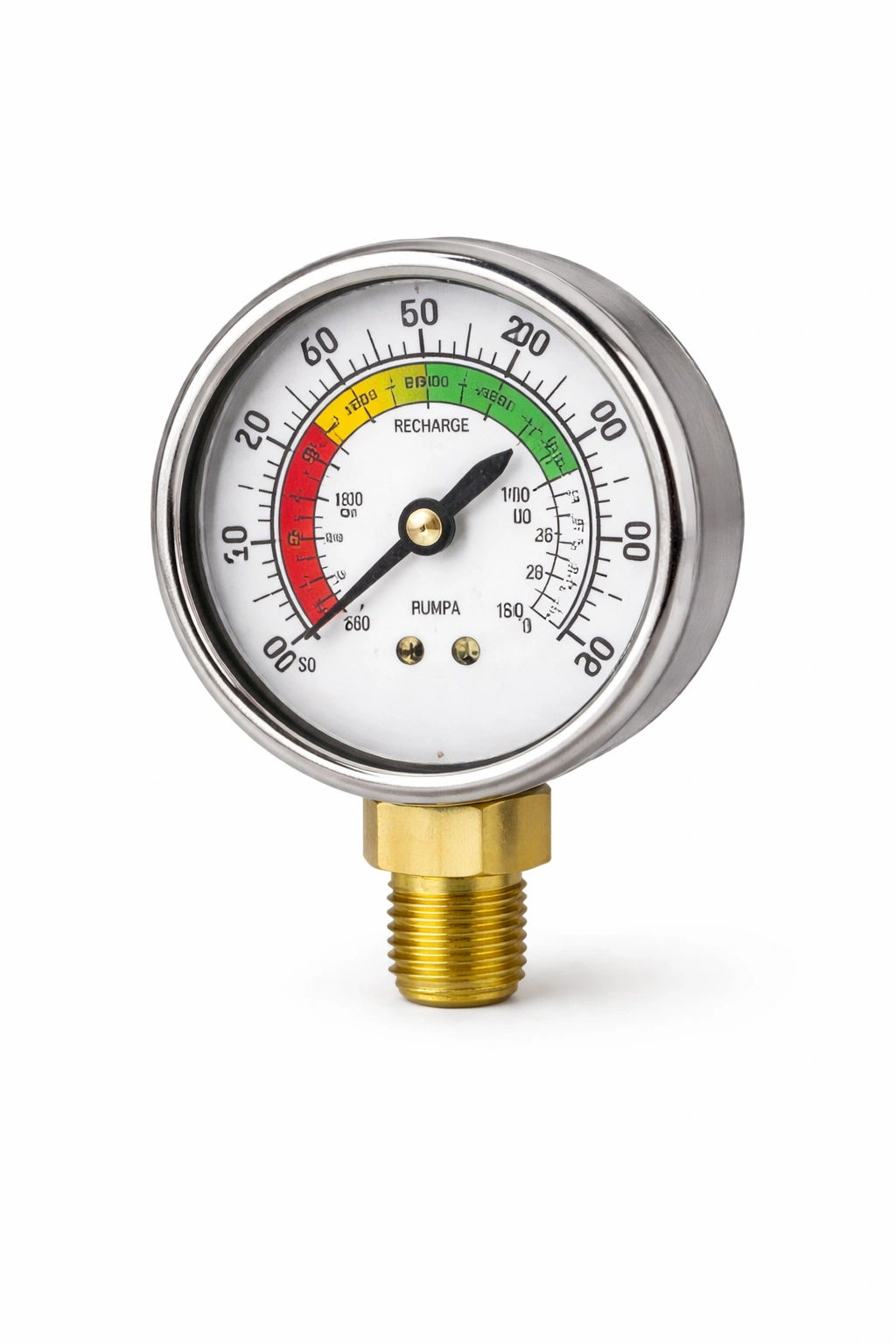
Fire Extinguisher Pressure Gauge – Bourdon Tube (Colour-Coded Dial)
Quality Assured
Premium Products
Expert Support
We're here to help
Description
The pressure gauge is the only visual indicator of an extinguisher's readiness. A single glance at the dial tells the inspector, the building occupant, and the fire auditor whether the unit is charged, over-pressured, or has lost its propellant. In monthly inspections per IS 2190, the very first checkpoint is: "Is the gauge needle in the green zone?" A missing, fogged, or stuck gauge is an automatic service tag.
This bourdon-tube gauge is a direct-reading mechanical instrument. A curved phosphor-bronze or beryllium-copper tube (the "bourdon tube") flexes proportionally with internal pressure, driving a gear-and-pinion mechanism that rotates the pointer across a colour-coded dial. The design requires no power supply, no electronics, and no calibration equipment in the field—it simply works, reliably, for years.
The dial face is divided into three zones: a red zone (under-charged) on the left, a wide green zone (service pressure) in the centre, and a red zone (over-charged) on the right. Typical service-pressure ranges are 14–16 bar for stored-pressure ABC/BC extinguishers and 8–12 bar for water and foam types. The gauge range is selected to match the extinguisher working pressure, with the green band centred on the nominal charge pressure.
The connection thread is ¼″ BSP male, fitting standard valve gauge ports. A brass adapter ring may be required for certain older valve models. The gauge case is typically 25 mm or 37 mm diameter, chrome-plated steel, with an acrylic or polycarbonate lens. For outdoor or marine applications, glycerine-filled variants are available—the glycerine dampens vibration-induced pointer flutter and prevents lens fogging.
Gauges should be replaced at every 5-year refill, or immediately if the lens is cracked, the pointer is stuck, the dial face is discoloured, or the gauge reads green on an obviously discharged or leaking extinguisher (indicating internal mechanism failure). A stuck gauge is more dangerous than a missing one—it provides false assurance.
For quality assurance, incoming gauges should be batch-tested against a calibrated reference manometer. A random sample of 5 % of each batch, pressurised to mid-green and compared against the reference, is sufficient to catch manufacturing defects before they enter service.
Frequently Asked Questions

Stay Informed: Fire & Safety News and Updates
Subscribe to our newsletter for timely announcements on the latest government fire safety regulations, industry standards, newly released safety equipment, and product availability. Whether it's new product launches or critical rule changes, we'll keep you up to date so you can stay prepared.